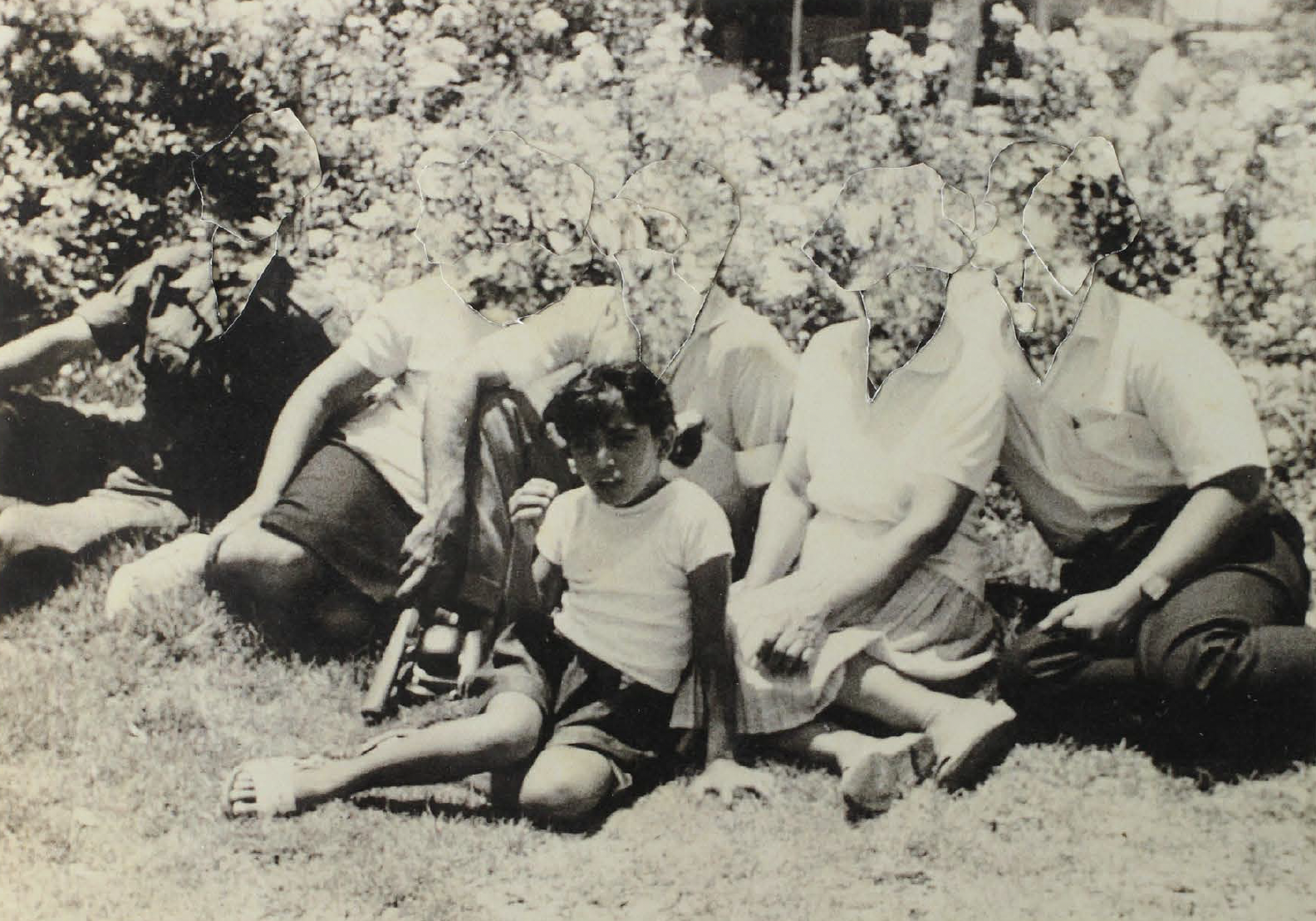
I grew up in a house where much remained outside the boundaries of language. What wasn't said in words was often expressed through the eyes, gaze, gestures and body movements. This gap created in me, from a young age, a need to translate for myself what hadn't been translated for me, and to find a form for it. Out of this, art became for me a space of expression for everything that was unspoken, yet present.
It's no coincidence that my practice began around giving visual form to the word and the letter, focusing on typography and calligraphy: controlled, legible signs that carry within them connotations of space, history, time, and place.
As time passed and my artistic research deepened, it became clear to me that in every work, the body stands at its center, whether covertly or overtly. My work is multidisciplinary: self-portraiture, performance, sculptural and material work, and in recent years I've been exploring these through the medium of photography, through direct photography, the family archive, and organic materials. Some of these materials carry symbolic, aesthetic, historical, and familial significance, tied to my parents' countries of origin, Iran and Iraq, and to their emigration from there; others are simple, everyday materials often coded as feminine. Through all of these, I look directly at power relations, social issues, and the boundaries of identity and gender.
Alongside this, there is an attempt to understand the relationships between bodies and space, through multiplicity, installation, the creation of temporary structures, and estrangement. In the course of the artistic process, the photographic subject ceases to be read merely as an object, and takes on meaning that points beyond itself, toward something else.
At the foundation of the works lies a constant tension between vitality and death, out of which arises an attempt to turn the "object" into a "subject." The living body serves for representation and as a monument, while, in contrast, the inanimate image is personified and imbued with life. The motif of migration itself appears in the works as "death," both cultural and linguistic. Facing this stand materials from the domestic and familial space, which have already lost their vitality and been severed from their source, and their use becomes a daily ritual in which one actively rebels against decay and time.